Wood CNC machine: choose by fit, controls, and support.
Choose a wood CNC machine by matching the planned work to these boundaries: work envelope, material and holding, dust and machine control, and manufacturer support. Start with the parts and material you intend to use. Require the manufacturer documentation to cover that use and the proposed holding method. Then identify the guarding and dust-control instructions that apply to the machine. OSHA's woodworking and machine-guarding pages concern workplaces; they do not establish hobby-shop safety or product suitability. Source: OSHA, verified 2026-08-09. Use the table and evidence checklist below instead of treating a ranked product list as a fit decision.
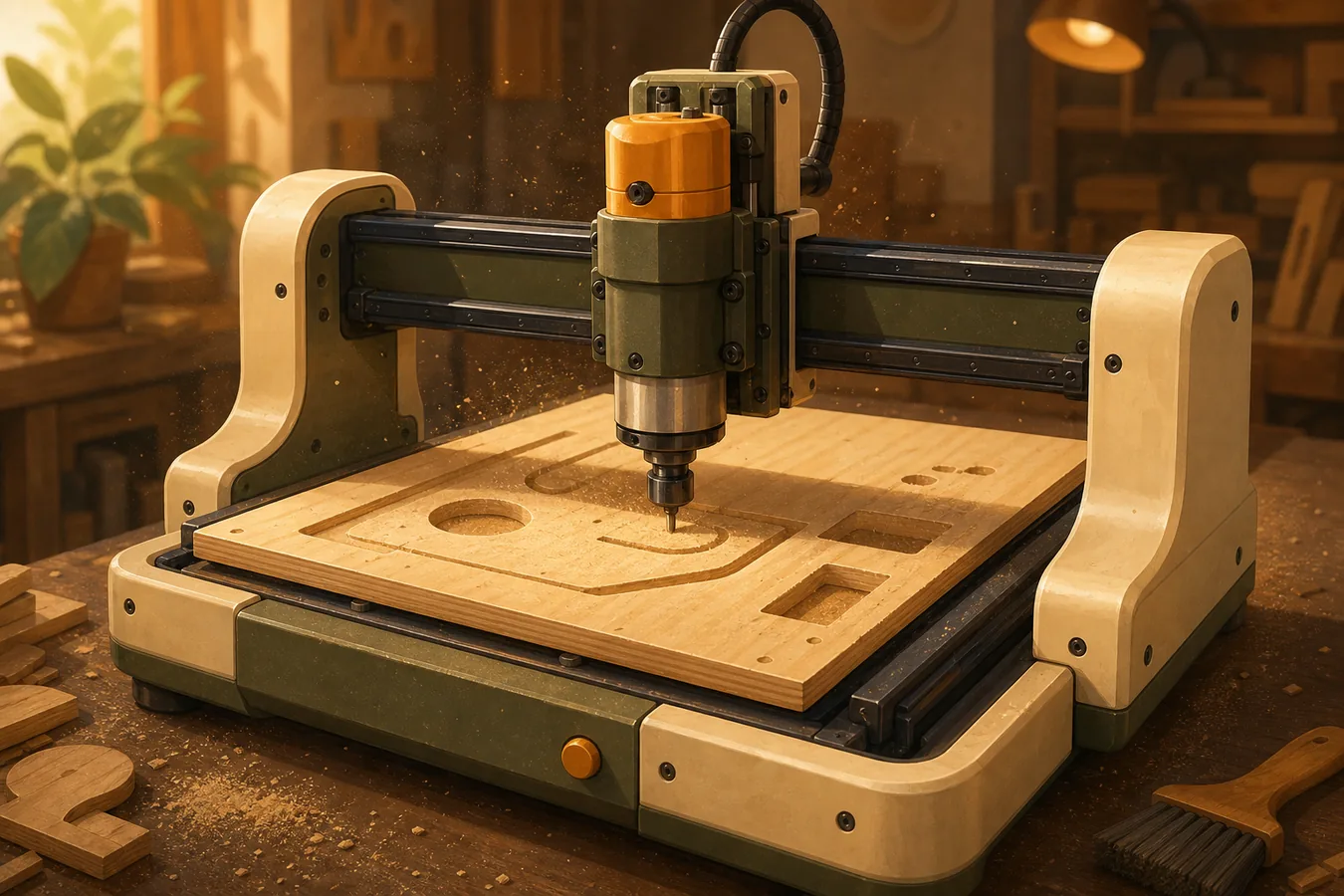
How should you choose a wood CNC machine?
Write the job boundary before opening product pages. Use these questions as the shortlist gate:
- Work envelope: do all planned part dimensions fit within the manufacturer's stated work area?
- Material and holding: do the manufacturer's instructions cover the planned material and holding method?
- Dust and control boundary: what guarding and dust-control instructions does the manufacturer specify for that use?
- Support: which instructions and support terms will apply to the exact product under consideration?
Wood CNC machine buyer table
| Decision boundary | Evidence to collect | Decision rule |
|---|---|---|
| Work envelope | Planned part dimensions and the manufacturer's stated work area. | Keep the candidate only if every planned part dimension fits the stated work area. |
| Material and holding | The planned material and holding method beside the relevant manufacturer instructions. | Keep the candidate only when the documented use covers both. |
| Dust and machine control | Manufacturer instructions for guarding and dust control. For covered U.S. workplaces, OSHA states: “One or more methods of machine guarding shall be provided to protect the operator and other employees in the machine area from hazards such as those created by point of operation, ingoing nip points, rotating parts, flying chips and sparks.” Source: 29 CFR 1910.212(a)(1), verified 2026-08-09. | Do not treat the workplace rule as a product approval or a complete home-workshop assessment. |
| Support | Current instructions and support terms for the exact product. | Keep the candidate only if the available support matches the ownership boundary you wrote down. |
How can you document the required work envelope?
Make a part register before comparing candidates. Give each planned part a short identifier and record its finished length, width, and thickness. Keep those finished dimensions separate from the stock dimensions you expect to load. Then copy the stated work area from the current manufacturer documentation into a separate candidate column. This keeps a project requirement distinct from a seller's specification and makes the comparison reviewable later.
For every row, write a simple result: fits, does not fit, or unresolved. A dimension that is absent or ambiguous in the documentation is unresolved, not an assumed fit. Note the document title, page or section, URL when applicable, and the date you checked it. If a project depends on a special orientation or a different stock size, record that dependency beside the part rather than silently changing the requirement. The purpose is not to calculate a machine's capability; it is to expose which parts are actually supported by the stated work area.
Which material and holding questions belong in the decision record?
Describe material and holding together because evidence for one does not automatically cover the other. For each planned job, name the material as it appears in your project record, describe the stock form and dimensions, and describe the proposed holding method in plain language. Beside those entries, cite the manufacturer instruction that covers the material and the instruction that covers the holding method. If the manufacturer uses a different term, retain both terms so the match can be checked instead of inferred.
- Material question: does the exact documentation identify the planned material or clearly place it inside a documented category?
- Holding question: does it describe or permit the proposed way of securing that stock?
- Combined-use question: is there evidence for this material-and-holding combination, rather than two unrelated references?
- Gap question: who must clarify an omission, and where will that clarification be recorded?
Do not convert silence into permission. Mark a missing material, stock form, or holding instruction as an open item and remove the candidate from acceptance until the gap is resolved in applicable manufacturer documentation or support evidence.
What guarding and dust-control evidence should you retain?
Build an instruction index for each exact candidate. Under guarding, list the manufacturer sections that apply to setup, normal use, access, and the proposed holding arrangement. Under dust control, list the sections that apply to the planned material and use. Record required components or conditions only as the manufacturer states them; do not substitute a generic arrangement or turn an OSHA workplace citation into product instructions.
Keep the OSHA material in a separate source row labelled workplace context. It can document the quoted workplace rule and the identified workplace hazard, but it cannot fill a missing manufacturer instruction, approve a candidate, or establish a complete home-workshop assessment. If documents conflict, versions are unclear, or the proposed arrangement is not addressed, record the conflict and stop the decision until authoritative instructions for the exact candidate resolve it.
How should the support and evidence log be structured?
Use one dated log rather than browser tabs or memory. A useful entry contains the candidate's exact name, the question asked, the source owner, document title or support channel, revision or publication date when shown, URL or file reference, date accessed, relevant passage, and status. Use consistent statuses such as supported, contradicted, and unresolved. Keep the quoted passage separate from your own note so another reader can tell what the source said and what you concluded.
Log support terms with the same discipline. Record which channel is offered, what scope it says it covers, and which exact product those terms address. Do not turn the existence of a channel into a promise about response quality or outcome. A later answer should be appended with its date and provenance, not used to overwrite the original question. This produces an audit trail for the shortlist without claiming that the machine was tested.
What belongs on the acceptance checklist?
- Every planned part has finished and stock dimensions, and every dimension has a documented fit result.
- Every planned material and holding method is matched to applicable instructions for the exact candidate.
- The proposed guarding and dust-control setup is covered by the manufacturer's current instructions.
- The evidence log identifies sources, dates, relevant passages, conflicts, and unresolved questions.
- Included and required items are recorded from the current scope without a price estimate.
- Support terms and the learning documents needed by the owner are identified for the exact product.
Accept a candidate for the shortlist only when every checklist line is supported. Acceptance means that the buying record is complete enough to compare; it is not a safety certification, product approval, performance prediction, or report of hands-on testing.
When should you stop the buying decision?
Stop when any planned part lies outside the stated work area; the planned material or holding method is absent from applicable instructions; the guarding or dust-control arrangement is undocumented; evidence conflicts without a resolved authoritative answer; required instructions cannot be identified; or support scope is too unclear for the ownership boundary you defined. Also stop if a comparison depends on an undated listing, an assumed included item, an estimated price, or a claim that cannot be tied to its source.
A stop is not a negative verdict on the machine. It means the current record cannot establish fit. Write the missing evidence as a specific question, assign it an unresolved status, and resume only when the exact source boundary is clear. If the gap concerns material, holding, guarding, or dust control, do not waive it to keep a favored candidate on the list.
Is it cheaper to build or buy a CNC machine, and is CNC difficult to learn?
Do not answer either question from a product label or an advertised machine price. Prepare the same evidence packet for a build path and a purchase path:
- Scope: record the work envelope, planned material, and holding method.
- Control boundary: record the applicable guarding and dust-control instructions.
- Included and required items: record them from the current listing or build scope without inserting an estimated price.
- Learning and support: record the instructions and support terms available for that path.
A cost conclusion requires dated, complete scopes for both paths. A difficulty conclusion requires the learning and support scope for the path under review. This page supplies neither a price estimate nor a universal difficulty rating.
What safety boundary should a wood CNC buyer verify?
Use the manufacturer's instructions for the exact machine, material, holding, guarding, and dust-control setup. The OSHA sources below address workplaces. They are not a guarantee of hobby-shop safety or a finding that a product suits your use.
- Machine guarding: for covered U.S. workplaces, OSHA states: “One or more methods of machine guarding shall be provided to protect the operator and other employees in the machine area from hazards such as those created by point of operation, ingoing nip points, rotating parts, flying chips and sparks.” Source: 29 CFR 1910.212(a)(1), verified 2026-08-09.
- Router guarding: for production routers in covered workplaces, OSHA states exactly: “Enclose the tool with an adjustable tool guard, as shown in Fig. 1 [29 CFR 1910.213(m)(1)].” This workplace control does not establish the safety or suitability of a home CNC setup. Source: OSHA production-router eTool, verified 2026-08-09.
- Wood dust: OSHA's woodworking page identifies wood dust among woodworking hazards and presents hazard-control information for workplaces. Source: OSHA Woodworking Hazards and Solutions, verified 2026-08-09.
FAQ: wood CNC machines
What is the best CNC machine for woodworking?
Choose from the work envelope, material and holding plan, dust and control boundary, and manufacturer support required by the planned work. A ranked list cannot establish that fit.
How much does a wood CNC machine cost?
Record the current manufacturer listing, included items, required items, and support terms for each candidate. This guide does not publish or estimate a price.
What is a CNC machine for wood called?
Wood CNC router and CNC wood router are category names used for a computer-controlled routing machine intended for wood. Use the manufacturer's exact product name when checking instructions and support.
Is CNC difficult to learn?
Define the learning scope from the manufacturer's instructions, the planned material and holding method, the work envelope, the dust and control boundary, and the available support.
Is it cheaper to build or buy a CNC machine?
Do not infer the answer from an advertised machine price. Compare dated, complete scopes for the build and purchase paths, including instructions, holding, dust and control requirements, and support.
For the next decision, see the desktop CNC framework and the benchtop milling guide.
Written by Tileo, operator of Make At Home.